
Notes
Flexible Clay Sheets vs Traditional Clay Veneer: Which Should You Specify?
A specifier's comparison of flexible clay sheets and traditional clay veneer — thickness, corners, cutting, weight and installed cost, with the cases where each one wins.
Published · 10 min read · Curvato
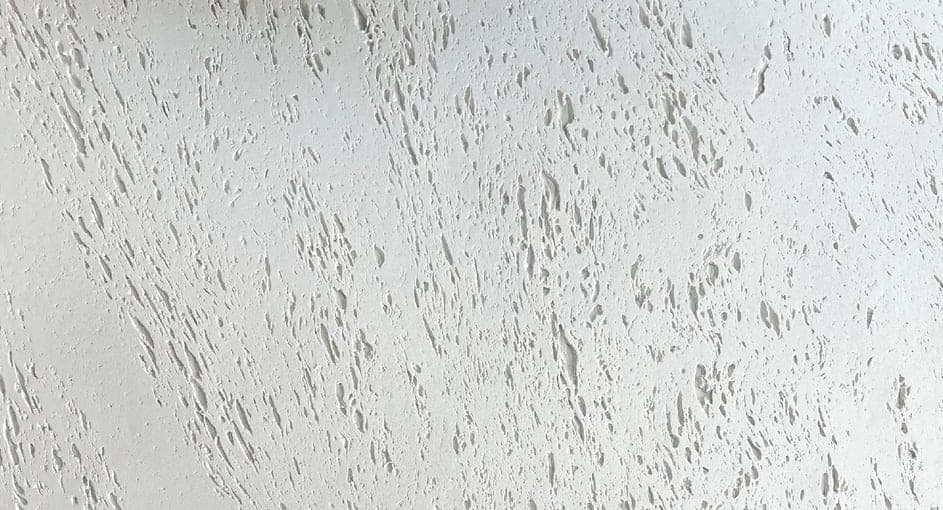
Both are thin. Both are applied over something structural. Both give you a stone or clay surface without the mass of a solid unit. On a specification sheet they can look like alternatives to one another, and specifiers regularly treat them that way.
They are not alternatives. One bends and one does not, and almost every practical difference between them follows from that.
Defining the terms
Traditional clay veneer is a fired clay unit sliced thin — a brick slip, a thin terracotta tile. Typically 5 to 20mm, sometimes more. Rigid, because it is fired.
Stone veneer is the same idea in quarried stone: a slice at 5 to 20mm, sometimes laminated to a fibreglass or aluminium backing to stop it breaking in transit. Also rigid, though the laminated ones will take a very gentle curve.
Flexible clay sheets are Modified Clay Material — a clay-based mineral body with a polymer modifier, cross-linked by microwave irradiation rather than fired. 2.5 to 3.5mm, and elastic.
The eight differences that matter
1. Thickness, and what it eats
A 15mm veneer plus a 5mm adhesive bed takes 20mm off the room on every clad face. In a corridor clad both sides that is 40mm of width gone. It also means the cladding stands proud of any adjacent finish, so every junction needs a trim or a shadow gap. A 3mm sheet lands close enough to flush that most junctions can simply butt.
2. Weight, and whether anyone has to check the structure
Traditional veneer runs 12 to 35 kg/m² depending on material and thickness. Flexible sheets are about 4.5. Below roughly 10 kg/m² nobody asks the structural engineer anything; above it, on a retrofit, somebody usually has to.
3. External corners — where they are level
Worth saying plainly, because it is the row people assume flexible wins and it does not. A sharp 90° arris is a far tighter bend than either material will take. A rigid veneer needs both edges mitred on a wet saw, or a purpose-made return piece ordered with the job. A flexible sheet needs the same detail — unless the corner itself is given a radius of at least 190mm at the substrate, in which case the cladding runs round it unbroken and the mitre disappears.
So this is a design decision rather than a material one. Detail a radiused corner and flexible wins outright; keep the arris sharp and both materials are mitred.
4. Curves — where rigid simply stops
A rigid veneer cannot follow a column at any radius. Your options are bespoke curved sections cut on a CNC, or faceting the curve and accepting a mitre every 150mm. Flexible sheets wrap any column of 381mm (15in) diameter or more — the limit is a diameter, not a radius, which is worth reading twice. If your project has columns, arches or a curved reception front, this is not a preference; it decides the specification. We have written up how a curve is actually set out including where to put the seam.
5. Cutting, and whether the site allows it
Rigid veneer cuts on a wet saw with a diamond blade: water, slurry, noise, and a cutting station somewhere on site. Most mall fit-outs and every occupied-building refurbishment ban that outright. Flexible sheets cut with a knife or shears, dry, at the wall.
6. Support above three metres
Adhesive alone is generally not trusted for rigid veneer above low level; specifications add mechanical fixing, which means a frame or fixings and the coordination that comes with them. A 4.5 kg/m² bonded sheet does not carry that requirement, which removes a whole section from the bill.
7. Colour consistency across batches
Stone comes out of a working quarry and the seam changes. Anyone who has tried to match a stone order eighteen months later knows how that goes. A manufactured mineral body delivers the same shade code this year and next, which is why retail rollouts specify flexible almost without exception.
8. Depth at close range — where traditional wins
Being straight about it: real stone has real depth, because it is real stone. Light enters the crystal structure and scatters. A moulded mineral relief is convincing, and physical relief beats any printed finish by a distance, but at arm's length under good light a stone specialist will know. If that matters on your project, it matters, and no other row in this list outweighs it.
How to choose
Specify traditional veneer when provenance is the point, the geometry is flat and orthogonal, the structure has capacity to spare and the programme has room for a wet trade.
Specify flexible clay sheets when there are curves, when it is a retrofit, when the programme is tight, when wet cutting is banned, when the finish carries into a wet area, or when the wall has to be repeatable across sites and years.
The full row-by-row version, including installed-cost notes, is on the clay veneer comparison page.
One thing people get wrong
Comparing the two on material rate per square metre and stopping there. The rate is the smaller half of the number. A rigid veneer specification also buys mitring labour, return pieces, mechanical fixing, wet cutting facilities, a breakage allowance, and a longer programme with the following trades waiting behind it.
Price installed cost including preliminaries, and on a job with any geometry the gap usually widens rather than narrows. Send us the veneer specification and the area and we will set the two out side by side.