
Applications
Where flexible clay cladding is being used
Six situations where a 3mm bonded sheet solves a problem that a rigid slab creates — and the collections that suit each.
01
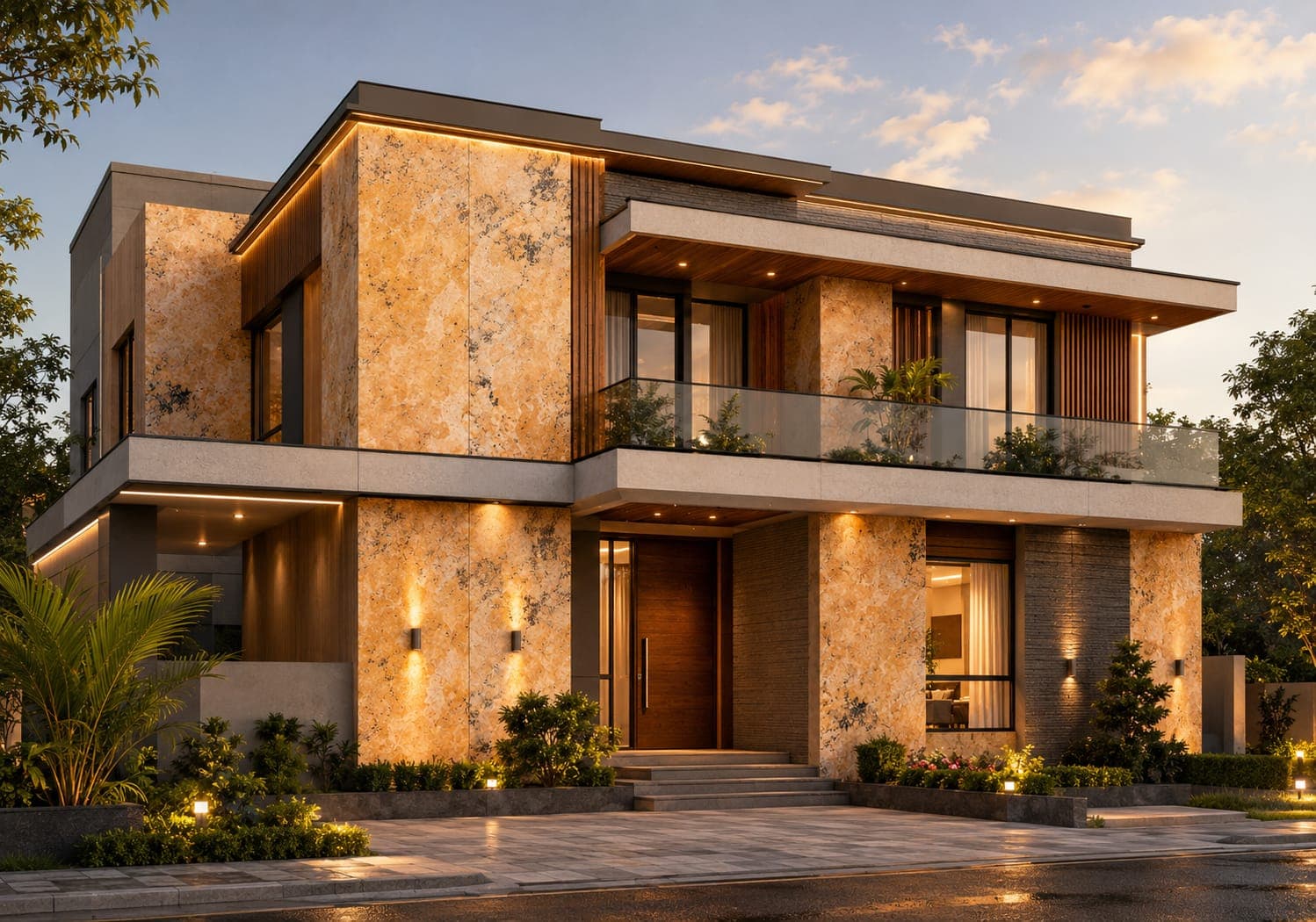
Exterior façade
Full elevations, parapets and boundary walls, without adding dead load to the structure.
On an elevation the deciding factor is usually weight. A 25mm stone rainscreen brings 55–65 kg per square metre plus a support frame, which on a retrofit often means the structure has to be checked and sometimes strengthened before a single slab is hung.
At roughly 4.5 kg per square metre the same elevation adds less than a tenth of that, bonded directly to a rendered or plastered substrate with no frame and no mechanical fixing. On a high-rise, the Level A1 fire classification and the absence of any panel that could work loose and fall are the two points that usually matter to the consultant.
Collections that suit it
02
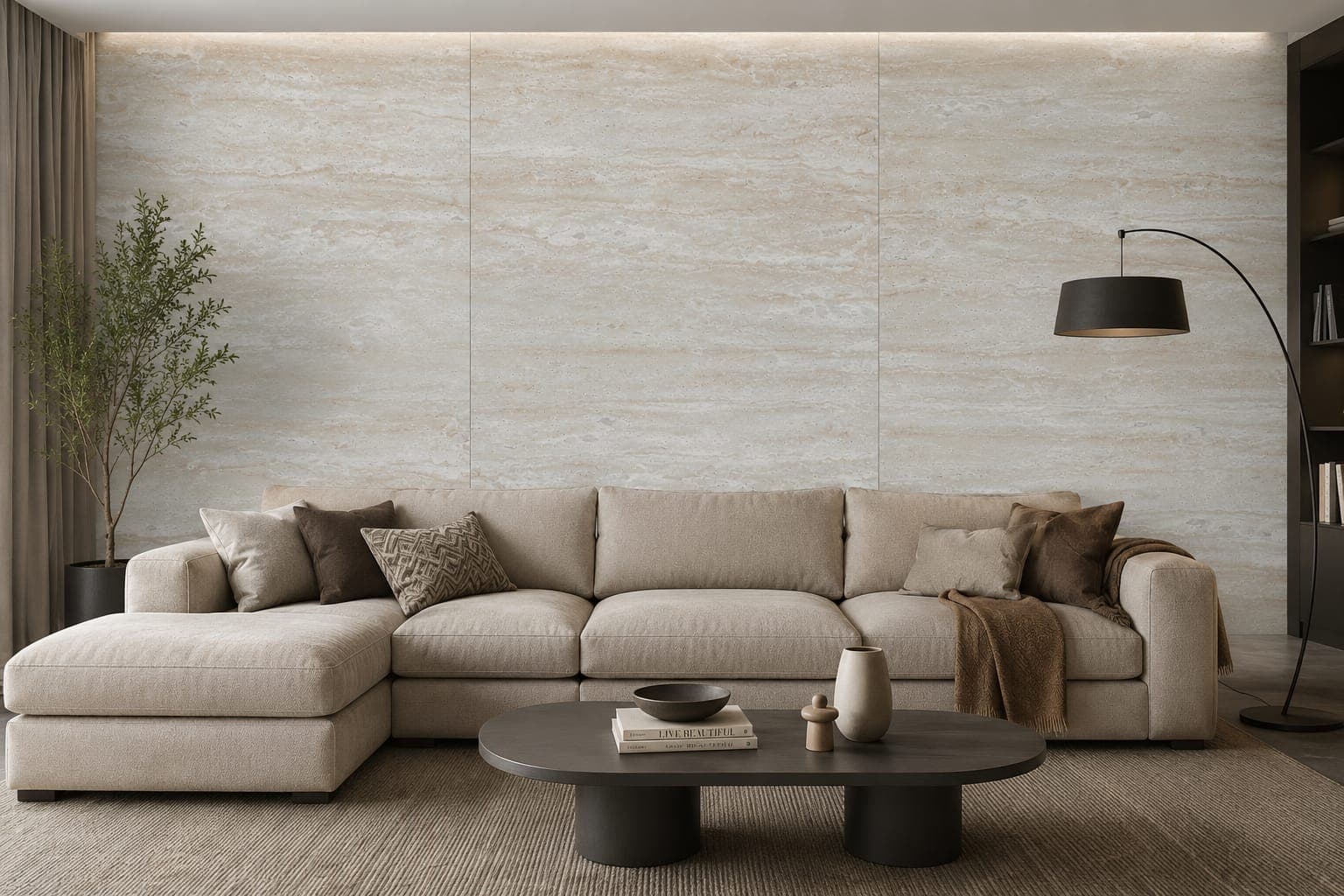
Interior feature wall
Full-height walls behind reception desks, beds and bars, in textures that would be impractical in stone.
Indoors the constraint flips: weight stops mattering and thickness starts to. A feature wall in stone eats 30–40mm off the room before the adhesive bed, which is why so many of them end up as a stone-effect print on a 6mm board.
A 3mm sheet lets the deep textures — Rattan Knit, Rockface Stone, Cut Stone — go on a wall that has to stay within a joinery reveal. It also means the cladding can run across a partition without a nib or a shadow gap to hide the build-up.
Collections that suit it
03
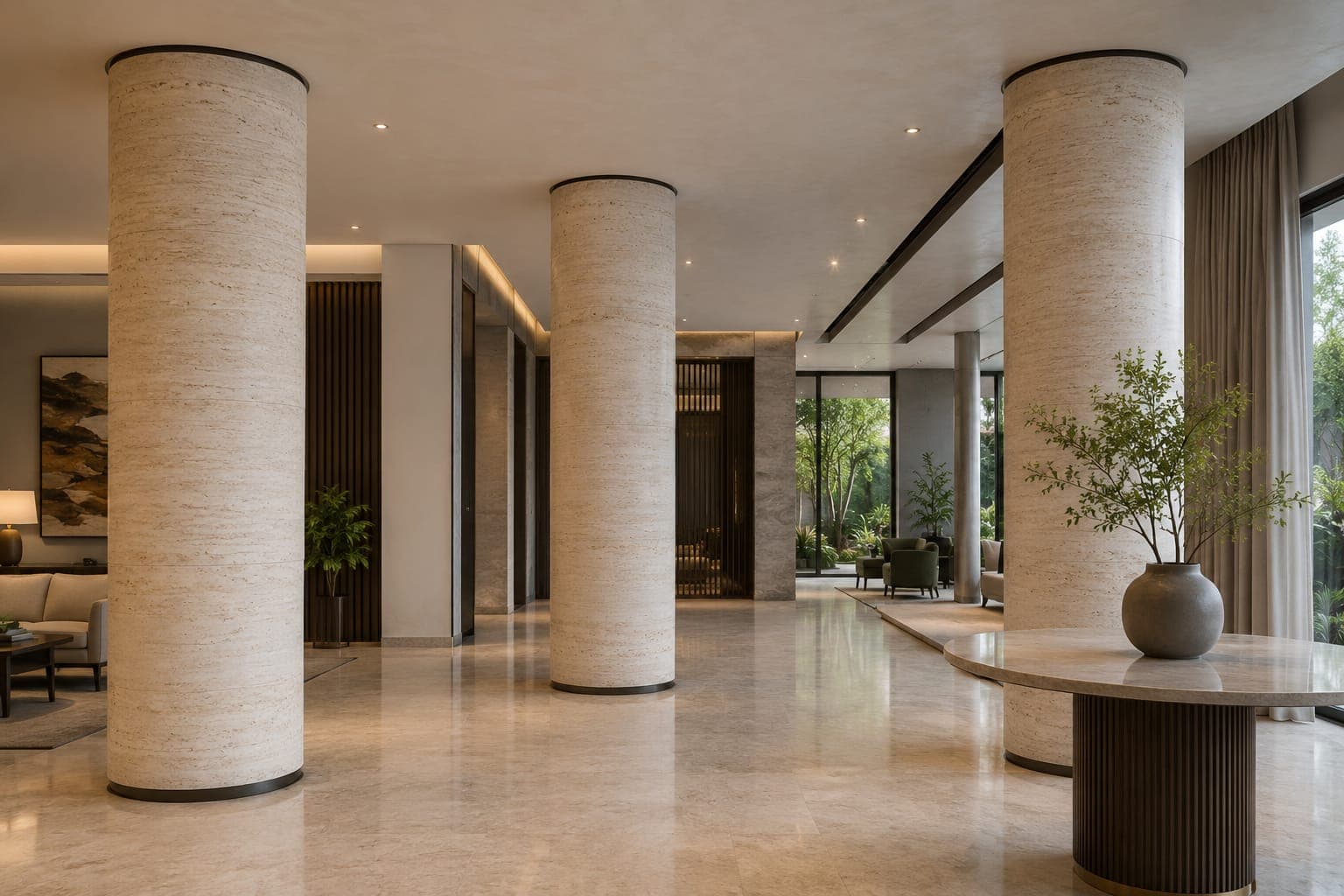
Columns and curved surfaces
Circular columns, arches, barrel vaults and curved walls — clad continuously, with no cut lines.
This is the application the material exists for. Cladding a circular column in stone means either a bespoke curved section cut on a CNC, or a faceted approximation with a visible mitre every 150mm. Both are expensive and both look like a compromise.
A flexible sheet wraps the column. The texture runs continuously around the radius, the joint falls on the back where nobody sees it, and the whole thing is done in an afternoon. Vertical textures like Ripple Stone and Liner Stone curve best because the corrugation absorbs the compression on the inner face.
Collections that suit it
04
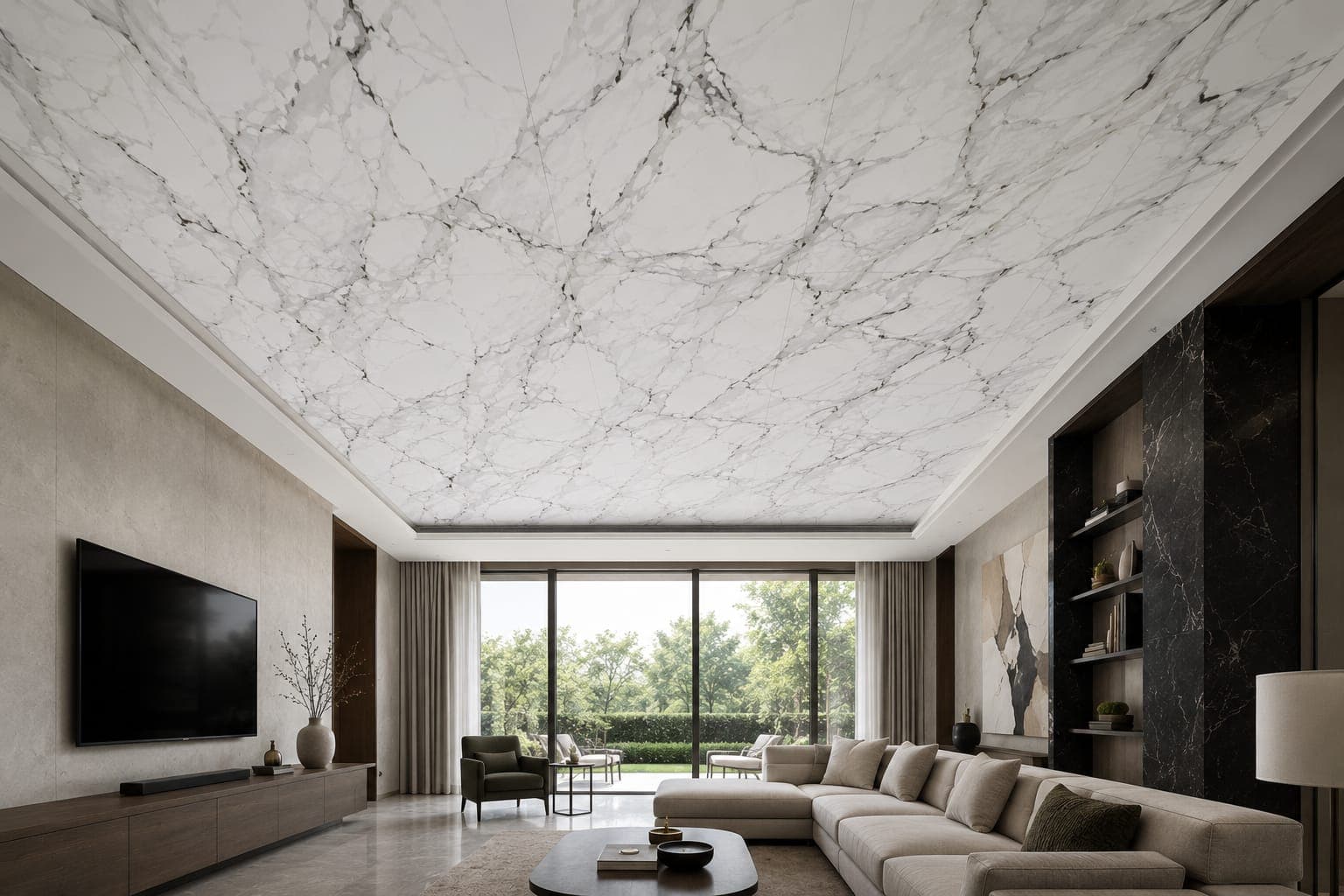
Ceilings and soffits
Overhead planes, coves and drop ceilings, where 4.5 kg per square metre is the whole argument.
Nobody clads a ceiling in stone. A 25mm slab overhead means a structural support system designed for the load and a fixing schedule that assumes the adhesive will eventually fail — which is a lot of engineering for a surface most people only glance at.
At 4.5 kg per square metre a ceiling is simply another bonded surface. That opens up the moves that make a room feel considered: a marble soffit over an island, a stone ceiling that continues down the wall without a break at the junction, or a cove that curves from wall into ceiling in one continuous piece, which no rigid material will follow.
Collections that suit it
05
Furniture and shutters
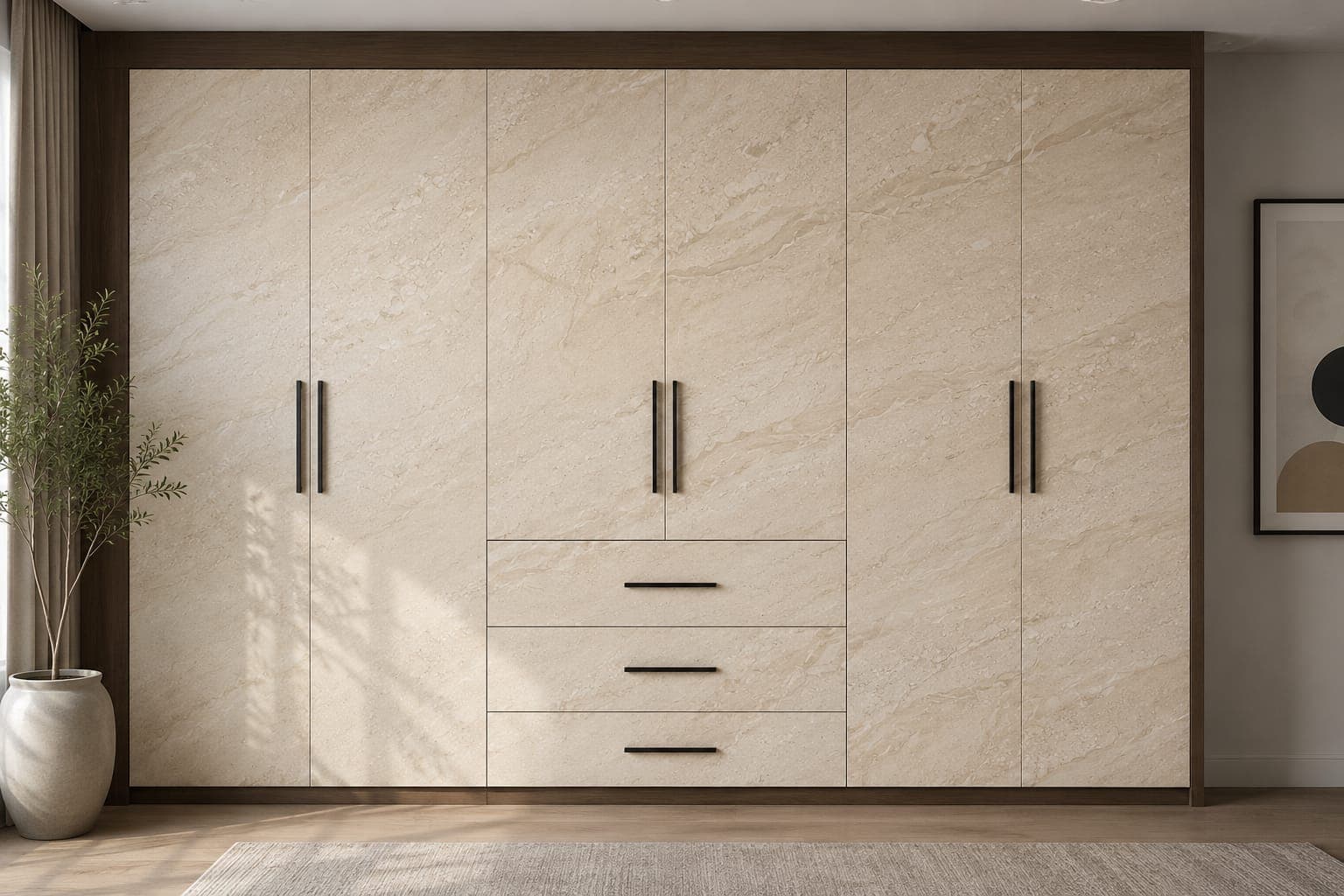
Wardrobe fronts, cabinet shutters, reception desks and island facings, in stone that a hinge can carry.
Joinery is where stone stops being an option entirely. A wardrobe shutter faced in 20mm marble is too heavy for its hinges, too thick for its carcass and too brittle to survive being opened four times a day for a decade.
A 3mm sheet bonded to ply or MDF gives a shutter with a genuine mineral face at a weight ordinary hardware carries. The same applies to island facings, bar fronts, headboards and reception desks — and because the sheet wraps an edge instead of needing a mitre, the return on a cabinet end has no visible joint.
Collections that suit it
06
Commercial and office
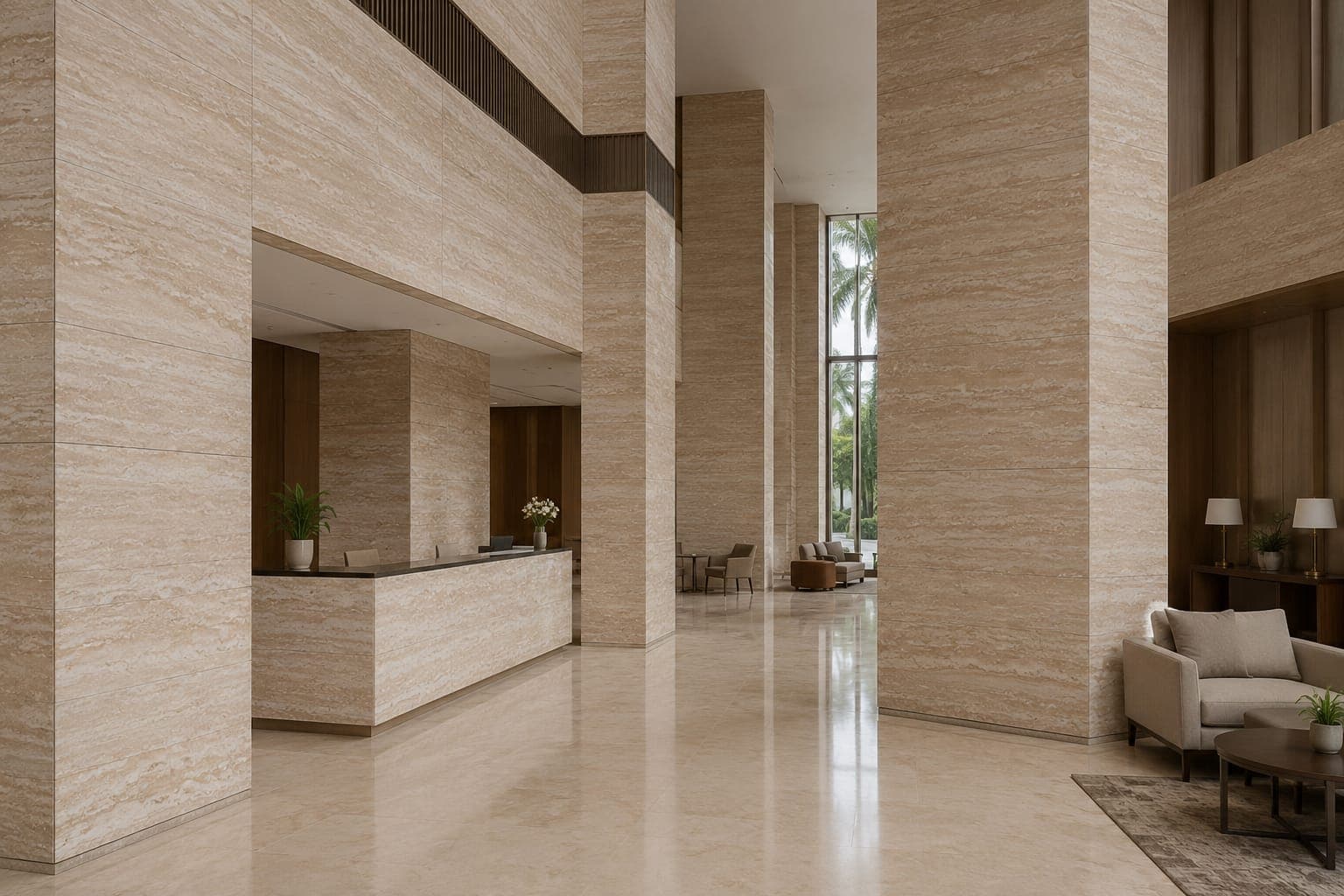
Lobbies, lift cores, stair wells and circulation — surfaces that take daily contact and still have to look new.
Commercial circulation is a wear problem. Lift lobbies get trolleys, stair cores get bags, and every mark shows on a painted wall within a quarter. Stone survives it but costs, and it makes the lift core heavier than it needs to be.
The relevant properties here are the mundane ones: it washes down with water, it does not need sealing, and a damaged sheet can be cut out and replaced without disturbing the ones around it. On a fit-out programme, the speed of application usually matters as much as the finish.
Collections that suit it

07
Institutional projects
Universities, hospitals, campuses and civic buildings, where fire classification and maintenance decide the specification.
Institutional work is specified by people who have to live with the building for thirty years. That changes the priorities: the Level A1 non-combustible classification clears the fire strategy on corridors and escape routes, and the fungus and algae resistance matters on a campus where nobody is going to pressure-wash a north elevation every monsoon.
The practical arguments are just as decisive. Large elevations go up fast with no wet trade and no scaffolding for a support frame, which matters when the work has to happen between terms. And because the finish is a manufactured shade code rather than a quarry batch, phase two matches phase one even if it is built three years later.
Collections that suit it
08
Hospitality
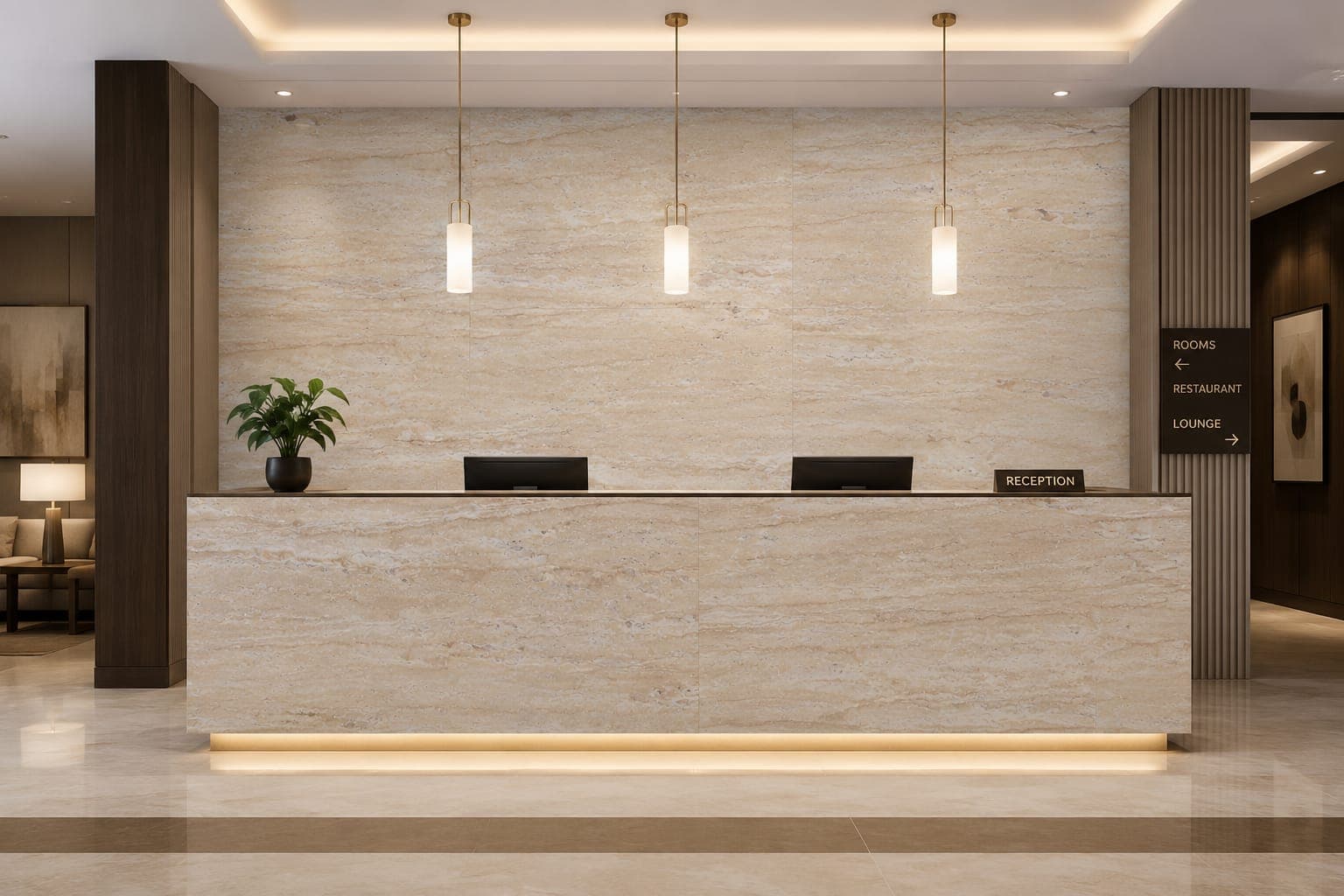
Hotels, restaurants and spas, where the finish has to be tactile at arm's length and survive a wet room.
Hospitality interiors are judged from close range. Guests touch the wall beside the bed and lean against the wall beside the bar, so a printed finish is caught immediately — the surface is flat when the eye says it should not be.
Physical relief solves that, and the waterproof, fungus-resistant body means the same texture can carry through from the bedroom into the bathroom without a change of material at the door. For spa and wet areas, that continuity is usually the reason the material gets specified at all.
Collections that suit it
09
Retail
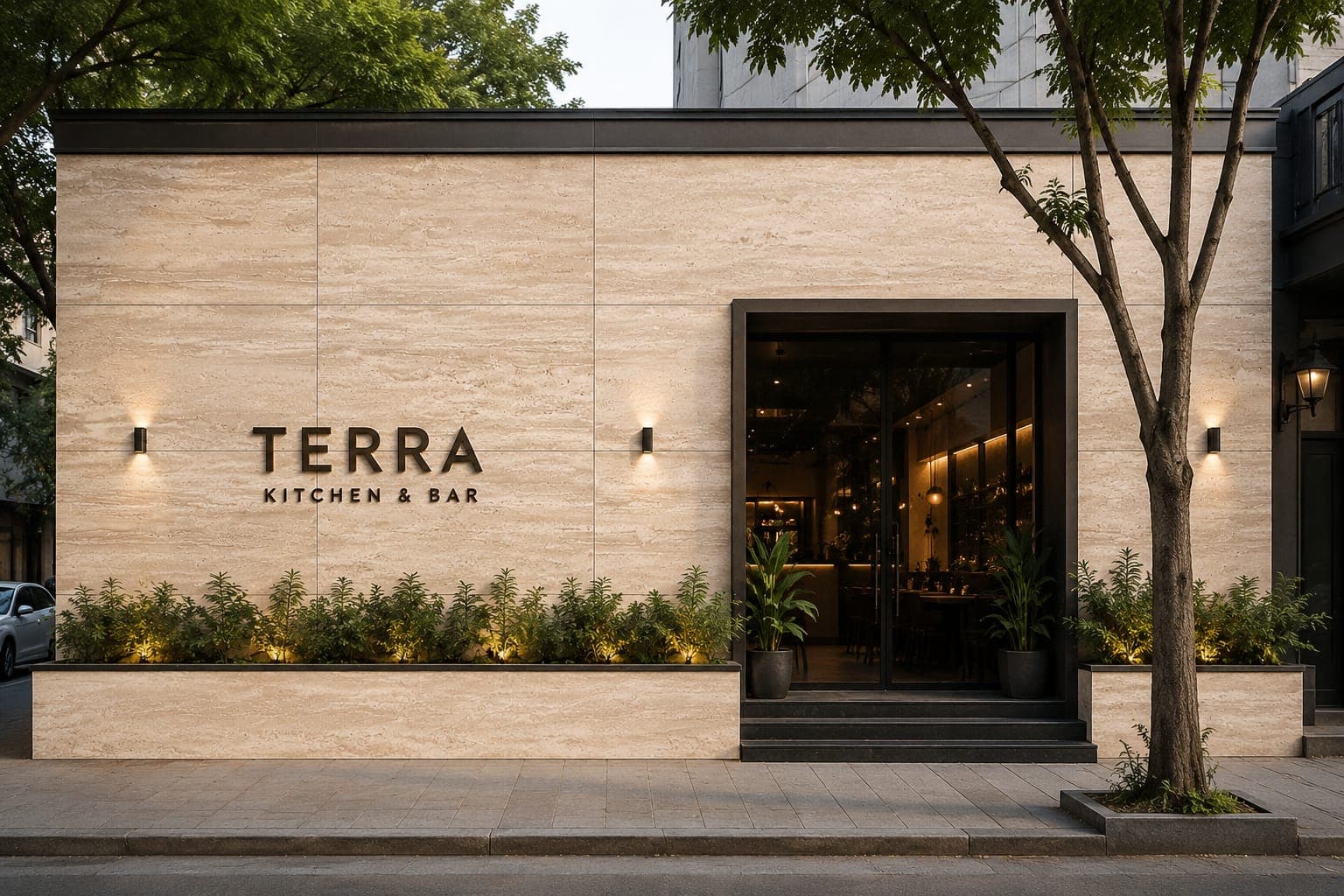
Shopfronts, fitting rooms and brand walls, on fit-out programmes that do not allow for wet trades.
Retail runs to a fit-out calendar measured in days, in malls that often ban wet cutting and slurry entirely. Anything that needs a diamond blade and a water feed is a scheduling problem before it is a cost problem.
This cuts with a knife, goes on with adhesive, and produces no dust and no slurry. On a rollout, the other advantage is repeatability: the same shade code delivers the same wall in Bengaluru and in Chennai, which natural stone from a working quarry cannot promise.
Collections that suit it
Get a quote
Tell us what the wall has to do.
Exposure, substrate, area and how close people get to it. Those four things decide which collections are worth sampling.
Request a quote
Send us the area, the substrate and the finish you have in mind. We reply with shade options, a written price and a lead time — usually the same working day.
The enquiry form loads in a moment. If it does not, email us at enquiry@curvato.in and we will pick it up from there.
Get a quote
Send us the wall. We'll send back a quote.
Tell us the area, the substrate and the finish you have in mind. We reply with shade options, a written price and a lead time — usually the same working day.
- Thickness
- 2.5–3.5 mm
- Weight
- ~4.5 kg/m²
- Fire rating
- Level A1
- Min. bend dia.
- 381 mm (15 in)